Prosecutor In Yella Beezy’s Murder-For-Hire Trial Tells Jury: “I’m Not Prosecuting Rap”
Closing arguments landed today in the capital murder trial of Markies “Yella Beezy” Conway, and the state ended its case by putting the rapper’s own words front and center.

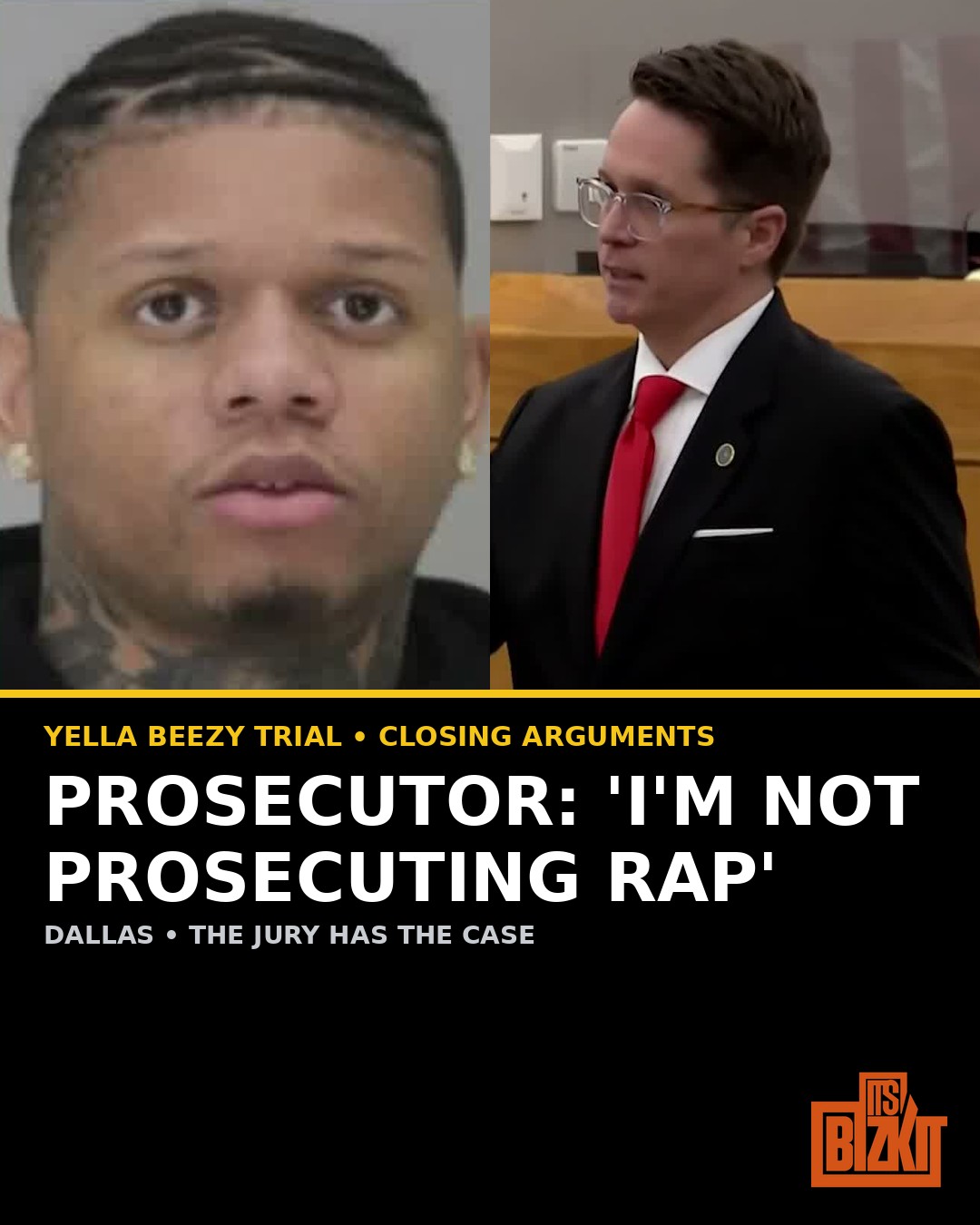
Dallas County prosecutor Tommy Adams delivered the state’s final closing argument on Tuesday (Nov. 10), walking jurors through the prosecution’s theory that Conway hired convicted shooter Kewon White to kill rival rapper Melvin “MO3” Noble. At one point, Adams referred to Conway as “Mr. Whatchamacallit” — a pointed callback to MO3’s song “2 Nineteen,” where MO3 flipped Beezy’s own “That’s On Me” catchphrase back at him.
Then Adams addressed the elephant in the room head-on. “I’m not prosecuting rap,” he told the jury, before urging them: “Go back and listen to his words.”
That has been the state’s playbook throughout the trial. In her portion of the closing, chief felony prosecutor Krystal Biggins told jurors the killing happened “over a rap beef,” and the prosecution played a clip from Conway’s 2019 interview with DJ Vlad — recorded after Conway survived a 2018 shooting — in which he vowed he would get his “lick back.” Prosecutors argue Conway employed White to murder Noble for money or the promise of money, and they have pointed jurors to a $40,000 cash withdrawal Conway made days after the killing.
Here is the background. MO3 was shot and killed on November 11, 2020, on Interstate 35 in Dallas. Kewon White, the man prosecutors say pulled the trigger, was convicted of capital murder in his own trial in September and sentenced to life in prison without parole. White has since publicly denied that Beezy paid him to do it.
Conway has pleaded not guilty, and he is presumed innocent. His defense team — led in closing by attorney Toby Shook — has argued the state never actually proved a payment or a promise of one, the element the whole murder-for-hire theory stands on. The defense caught a major break mid-trial when a key prosecution witness, Conway’s childhood friend Jose Bodega, recanted his grand jury account on the stand and admitted, “I made it up.” Judge Chika Anyiam denied the defense’s request to dismiss the charge, so the decision now belongs to the twelve jurors.
To be clear: everything above about Conway’s role is an allegation. He is on trial, not convicted, and no verdict has been reached.
What happens next is deliberations. The jury now decides whether the state proved beyond a reasonable doubt that Conway put a price on MO3’s life — or whether the money trail the prosecution built just isn’t there.
And notice the thread running through this case, because it’s the same one running through Pooh Shiesty’s federal case right now: the state keeps reaching for a rapper’s own recorded words — interviews, songs, catchphrases — and the defense keeps saying art and talk are not evidence. Adams said it himself today: he’s not prosecuting rap. The jury has to decide if that’s true.
Source: FOX 4 News
So let’s keep it a stack: should a rapper’s own words — his songs, his interviews, his catchphrases — be used as evidence against him at trial? Or is that putting the music itself in the defendant’s chair?