United Airlines Outage, Explained: A System Failure Held Departing Flights — Three Days After the FAA Ground Stop
If your United flight sat at the gate going nowhere Monday evening, you weren’t imagining it — and no, it wasn’t the FAA this time.
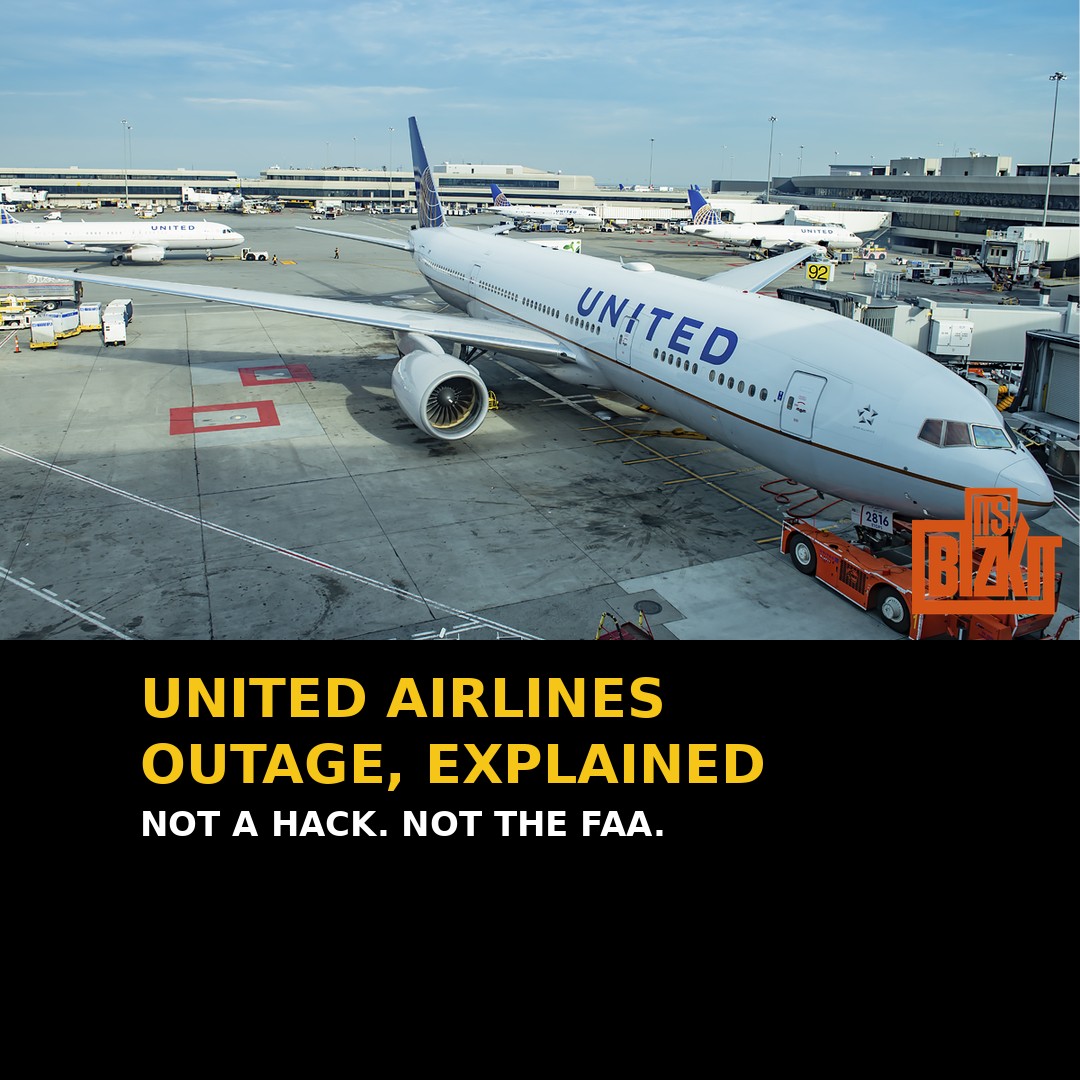
On Monday (Nov 16), United Airlines got taken down by its own technology: a companywide system outage froze the tools its flight crews need to legally take off, and departing flights across the network were held for about an hour. It was the second aviation tech meltdown in four days — three days after the FAA grounded every departure in America — and with Thanksgiving travel days away, everybody’s first question was whether the two were connected. Here’s the verified answer: they’re not.
WHAT ACTUALLY HAPPENED
United acknowledged the problem just before 5 PM ET, saying a technology issue was impacting departing flights. About an hour later, around 6 PM ET, the airline said it was resolved.
What broke was on the crew side, not the passenger side. According to an internal company alert obtained by CNN, the outage knocked out access to multiple applications flight crews use — flight planning, weather briefing and crew management tools. A memo from United’s pilots union, seen by Reuters, said the web-based outage also took down crew communications, and the airline could not provide departing flights with their final aircraft weights. No final weights, no takeoff — that’s a hard safety stop, not a paperwork delay. Pilots were told not to log out of several systems because they might not be able to sign back in, and crews who couldn’t pull up their flight plans were told to have dispatch email the documents to them.
You could hear it happen in real time. In air traffic control audio, a pilot on United Flight 1728 in El Paso, headed to Denver, told a controller: “We’re still waiting on our final weights… apparently there’s a company-wide system outage on it so might be a while.”
United spokesperson Leslie Scott told CNN the outage itself lasted about 30 minutes, with fewer than 150 flights impacted.
WHAT WAS NOT AFFECTED
Flights already in the air kept flying — the outage only touched departures. United Express regional flights were not affected at all. And this wasn’t a check-in or app meltdown: the failure was in the systems behind the cockpit door, which is why planes full of passengers sat ready at gates with nowhere to go.
THE NUMBERS, HONESTLY
FlightAware’s full-day count for United on Monday was rough — 645 flights delayed, about 20% of its schedule, and 25 canceled as of 6:50 PM ET, climbing to 811 delays and 28 cancellations by 9:50 PM ET. But those are whole-day totals on a day when the entire industry was still digging out from Friday’s ground stop, and they can’t all be pinned on this outage. United’s own number for the outage itself is fewer than 150 flights impacted. Both numbers are real; they just measure different things.
NOT A HACK. NOT THE FAA.
United was direct about the scariest theory: “There is no indication that this was a cybersecurity-related issue.” The FAA backed the airline up from the other direction, saying during the incident that United was experiencing a technology outage on its own end and that “it’s not an FAA equipment issue.” Transportation Secretary Sean Duffy said the same on Monday night: “This is not an FAA system-wide problem.” United has not said what caused the failure, and it has not named the system or vendor behind it.
WHY IT FEELS CONNECTED TO FRIDAY
Because the timing is wild. On Friday (Nov 13), the FAA ordered a nationwide ground stop that held every departing flight in the country for nearly five hours — the longest since 9/11. That one was traced to an L3Harris/Juniper router fault during telecom upgrade work on the FAA’s aging network, and officials have been clear it was not a cyberattack either. Airlines spent the whole weekend repositioning planes, crews and luggage, and Monday’s schedule was still fragile when United’s own systems went down. Two different failures, two different owners, one exhausted system — and zero evidence, per United, the FAA and Secretary Duffy, that the two events are linked.
WHERE IT STANDS NOW
The outage is over and United’s operation moved on Monday night. What’s left is the part nobody has answered: what actually failed inside United’s systems, three days before the busiest travel stretch of the year. Until the airline names a cause, every United delay this week is going to get searched like it’s the start of something bigger.
FLYING UNITED THIS WEEK? DO THIS
Check your flight status in the United app or on united.com before you leave for the airport — not when you get there. If your flight was delayed or canceled Monday and you chose not to travel, DOT rules entitle you to a refund for the unused ticket. And if your flight gets canceled this week, rebook inside the app first — phone lines and airport desks back up fast when a hub carrier stumbles.
Bottom line: Monday was United’s own system failing at the worst possible moment on the calendar — not a hack, not the FAA, and not a sequel to Friday. The planes are moving. The question hanging over Thanksgiving week is whether the tech holds.
Source: United Airlines statements to CNN and USA TODAY (Nov 16, 2026); Reuters reporting on the United pilots union memo; FAA and Transportation Secretary Sean Duffy statements; FlightAware data.