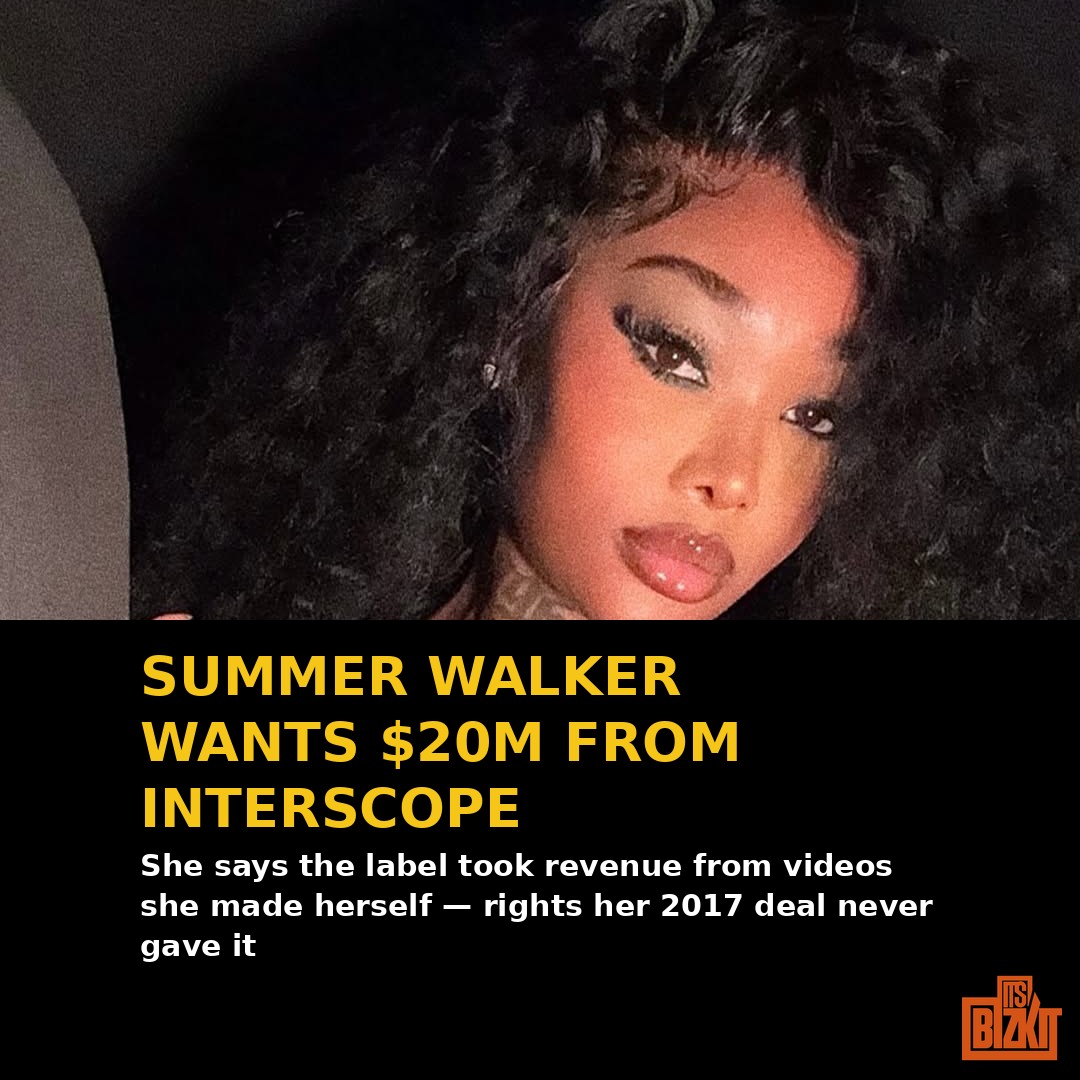
Summer Walker Seeks $20 Million From Interscope in Fight Over Her Own Videos
Summer Walker is no longer just defending herself against Interscope Records — she is coming for money of her own. On Wednesday night, November 18, Walker filed a cross-complaint in Los Angeles County Superior Court seeking at least $20 million from the label, alleging that Interscope collected revenue from videos she produced herself and from her personal YouTube channel, even though, she says, her 2017 recording deal never gave it the right to that money. The 10-page filing, first reported by Rolling Stone, lands inside the same case Interscope opened in October, when the label sued her for more than $50 million over albums it says she still owes.
What the Cross-Complaint Alleges
Walker’s argument turns on what her deal actually granted: she signed the agreement with Interscope on November 1, 2017, two months after signing with Atlanta’s LVRN. According to the cross-complaint, that deal gave Interscope only limited rights to use her name, image and likeness for promotional purposes. It did not, she alleges, hand the label her independently produced videos, her other digital content or the revenue from her personal YouTube channel. Her filing alleges the label took that revenue anyway, in breach of the contract. Beyond the $20 million, Walker asks the court to declare her agreement became unenforceable this summer and to rule on who owns the disputed material. She also demands that Interscope’s parent company, Universal Music Group, turn over any profits it improperly earned from the assets — a figure the filing says “is unknown and cannot be ascertained without an accounting.” Her attorney, Keith Moten, told Rolling Stone:
“Our cross-complaint seeks accountability for the alleged unauthorized exploitation of her creative assets and the revenues generated from it.”
How the Los Angeles Fight Started
The cross-complaint is the second act of a breakup that began in August, when Walker gave Interscope written notice that, effective August 27, she would stop working under the deal because it was no longer enforceable. She relied on California’s seven-year rule, the labor law that generally bars enforcing personal services contracts beyond seven years. A 1987 amendment to that law lets labels sue for recordings an artist agreed to deliver but did not — if they file within 45 days. Interscope filed on October 9, inside that window. The label alleges the deal required five studio albums and credits Walker with three: Over It, Still Over It and Finally Over It. It argues her breakthrough mixtape Last Day of Summer and the EP CLEAR were pre-album projects that do not count, leaving two albums and an EP outstanding, and it seeks damages in excess of $50 million, to be set at trial. Rolling Stone’s reporting on the final contract put Walker’s initial advance at just $110,000. When it sued, Interscope said the statutory deadline made filing necessary and that it hoped talks would lead to an amicable outcome. A hearing in the case is set for April 15, 2027. Interscope has not publicly responded to Walker’s cross-complaint.
A Separate War in Georgia
This is not the case ITSBIZKIT covered last week. That fight is in Georgia, against a different company, over different money. In August, Walker sued LVRN — the Atlanta label and management company that first signed her — in Fulton County, alleging fraud and diverted funds, and LVRN counterclaimed for a cut of her tour proceeds and royalties. The Interscope case is a California fight about the recording deal itself: whether Walker still owes albums, and now, whether the label profited from creative work it never owned. None of the claims on either coast has been decided by a court. What is clear is that one signature from 2017 now has Summer Walker litigating her way out on two fronts at once, and as of this week, she is playing offense in both.
More stories like this at ITSBIZKIT.
Source: Rolling Stone (cross-complaint obtained and first reported November 18-19, 2026; Interscope complaint reporting, October 2026); Billboard (Interscope v. Walker complaint, October 2026); Paste Magazine (November 19, 2026); AllHipHop (November 19, 2026). Photo: Indigault via Wikimedia Commons (public domain).